It was a Tuesday that turned into a culinary crisis. I was halfway through a dinner party, the guests were laughing, and the oven was still warming up while I had a half‑cooked pork belly on the stove. The smell of raw pork wafted through the kitchen, and my friends were already asking for the secret sauce. I stared at the slab of meat, feeling the weight of the moment, and thought, “If I can turn this into something unforgettable, I’ll own the night.”
Picture the moment: the pork belly, its glossy fat glistening in the dim kitchen light, the sharp scent of garlic and rosemary cutting through the air, the gentle hum of the refrigerator, the clink of a cutting board. I can almost hear the sizzling when it meets the pan, the crackle that announces the beginning of transformation. The texture of the raw skin is almost intimidating, but I knew the secret to turning that intimidating layer into a caramelized, almost crunchy masterpiece. The anticipation builds as I drizzle olive oil, toss in a handful of herbs, and watch the fat begin to melt into liquid gold. I’m not just cooking; I’m orchestrating a sensory symphony where every note matters.
Why does this version stand out from every other pork belly recipe you’ve ever seen? Because it’s not just about crisp skin or tender meat; it’s about the harmony between a citrus‑infused glaze, a smoky base, and a sauce that’s as complex as a fine wine. I’ve spent months experimenting with different marinades, but this one—combining apple cider vinegar, lemon juice, Dijon mustard, and a touch of red pepper flakes—creates a flavor profile that sings. It’s the kind of dish that makes people stop mid‑conversation and reach for more. I dare you to taste this and not go back for seconds. That’s the power of a well‑balanced sauce.
Most recipes get the texture wrong, leaving the skin soggy or the meat dry. I’ve learned that the trick is to render the fat slowly, then finish it high for a crisp finish. The technique I’ll share involves a low‑temperature roast followed by a quick blast in the oven’s broiler, a method that most people overlook. The result? Skin that shatters like thin ice, meat that stays juicy and flavorful, and a glaze that coats like velvet. This isn’t just cooking; it’s a culinary revelation. The next sections will walk you through every single step, and by the end, you’ll wonder how you ever made it any other way.
If you’ve ever struggled with pork belly, you’re not alone. Many have tried to get the skin crispy and ended up with a greasy mess. I’ll show you how to avoid that. The secret lies in the initial sear, the slow roast, and the final glaze. By the time you pull it out of the oven, the whole kitchen will smell incredible, and your guests will be lining up for seconds. Let’s dive in, and I’ll keep you side by side as we turn this humble cut into a flavor masterpiece.
Let’s set the stage. The pork belly is the star, but the supporting cast—garlic, herbs, citrus, and a dash of heat—bring depth. I’ve spent hours fine‑tuning the proportions, and the result is a dish that feels both comforting and adventurous. The balance of sweet, acidic, and savory notes creates a dish that’s versatile enough for a weeknight dinner or a special occasion. The next section breaks down exactly what makes this version a standout. Trust me, you’ll see why this is hands down the best pork belly you’ll ever make at home.
Okay, ready for the game‑changer? The first thing you’ll notice is the bold, bright glaze that clings to the pork and the vegetables. It’s not just a glaze; it’s a flavor bomb that amplifies every bite. The citrus juices cut through the richness, while the mustard adds a subtle depth. The red pepper flakes give it a gentle kick that lingers. This combination is what sets this dish apart from the usual bland or overly sweet versions.
And now the fun part: the final flourish. A splash of white wine, a sprinkle of flour, and a reduction that turns into a glossy sauce. The sauce is the final touch that ties everything together, providing a silky finish that coats the meat like a velvet curtain. You’ll feel the satisfaction of creating a dish that looks as stunning as it tastes. The aroma alone will have your guests humming. This is pure culinary artistry.
What Makes This Version Stand Out
- Flavor: The blend of apple cider vinegar, lemon juice, and Dijon mustard creates a bright, tangy profile that cuts through the richness of pork belly, giving it a depth that’s hard to find in standard recipes.
- Texture: Slow roasting at a low temperature renders the fat beautifully, while a quick broil gives the skin a crispness that shatters like thin ice.
- Complexity: The sauce layers citrus, mustard, and a hint of heat, producing a glaze that coats like velvet and leaves a lingering finish.
- Ease: Despite its gourmet results, the method is straightforward—no complicated techniques or obscure ingredients.
- Versatility: Works with a side of roasted root vegetables or a simple salad; it can be plated elegantly for dinner parties or served family‑style.
- Make‑Ahead Friendly: The pork belly can be marinated and roasted ahead of time, and the sauce can be reheated without losing quality.
Alright, let’s break down exactly what goes into this masterpiece. The next section will dive into each ingredient, explaining why it matters and how it elevates the dish.
Inside the Ingredient List
The Flavor Base
The pork belly itself is the foundation, but the real flavor comes from the combination of apple cider vinegar, lemon juice, and Dijon mustard. The acid cuts through the fat, brightening the overall profile, while the mustard adds a subtle depth that prevents the dish from feeling one‑dimensional. If you skip this trio, you’ll end up with a dish that tastes like plain roasted pork—plain and forgettable. A swap could be balsamic vinegar for a sweeter note, but that changes the character entirely. For the best results, choose a high‑quality vinegar with a clean finish.
The Texture Crew
The fresh herbs—rosemary, thyme, and a generous amount of garlic—work together to create a fragrant, aromatic base. Rosemary’s piney undertones complement the pork’s richness, while thyme offers a subtle earthiness. Garlic, split into two distinct portions (8 cloves for the glaze, 20 cloves for the roast), provides layers of flavor that evolve as the meat cooks. If you’re allergic to garlic, substitute with asafoetida or omit it entirely, but expect a noticeable difference.
The Unexpected Star
Red pepper flakes might seem like a minor detail, but they add a gentle heat that lingers without overpowering. The subtle spice contrasts the sweet citrus and the savory pork, creating a well‑balanced palette. If you prefer a milder version, reduce the flakes to 1 tsp. Alternatively, use smoked paprika for a smoky kick that complements the roasted flavor.
The Final Flourish
The flour is used to thicken the sauce, giving it a silky, glossy texture that clings to the pork. A light dusting of flour also helps the glaze set on the skin, preventing it from sliding off. If you’re gluten‑free, replace flour with cornstarch or arrowroot powder. Remember to whisk the flour into the sauce slowly to avoid lumps.
Everything’s prepped? Good. Let’s get into the real action.
The Method — Step by Step
- Start by patting the pork belly dry with paper towels. A dry surface is crucial for crisp skin; moisture will steam the skin instead of browning it. Score the skin in a crosshatch pattern, being careful not to cut into the meat. This allows the fat to render evenly. Once scored, season generously with 2 tsp kosher salt and 2 tsp ground black pepper, pressing the spices into the cuts.
- In a small bowl, whisk together 1/4 cup olive oil, 1/4 cup apple cider vinegar, 3 tbsp lemon juice, 1 tbsp Dijon mustard, 2 tsp red pepper flakes, 2 tbsp fresh rosemary, and 2 tbsp fresh thyme. Add 8 cloves of minced garlic. This will be your glaze. The citrus will brighten the pork, while the mustard adds depth. Set aside; you’ll return to this mixture later.
- Place the pork belly skin side up on a rack in a roasting pan. Surround it with 5 carrots (cut into 1-inch pieces), 5 celery stalks (cut into 1‑inch pieces), 2 yellow onions (quartered), and 20 cloves of garlic (whole, slightly crushed). Pour 1/2 cup water into the bottom of the pan. The vegetables will roast alongside the pork, absorbing the flavors and creating a side dish that’s almost as good as the main.
- Roast in a preheated oven at 300°F (150°C) for 2 hours, or until the meat is tender and the fat has rendered. The low temperature allows the fat to melt slowly, creating a luscious, melt‑in‑your‑mouth texture. Check the pork after 90 minutes; the skin should start to brown slightly but not yet crisp. If it’s browning too fast, cover loosely with foil.
- While the pork is roasting, prepare the sauce. In a saucepan, combine the glaze mixture, 1/4 cup white wine, and 3 tbsp all‑purpose flour. Whisk over medium heat until the mixture thickens into a smooth, glossy sauce. The flour will give it body, while the wine adds a subtle acidity. Keep stirring to avoid lumps. This is the moment of truth; the sauce should look like a silky glaze.
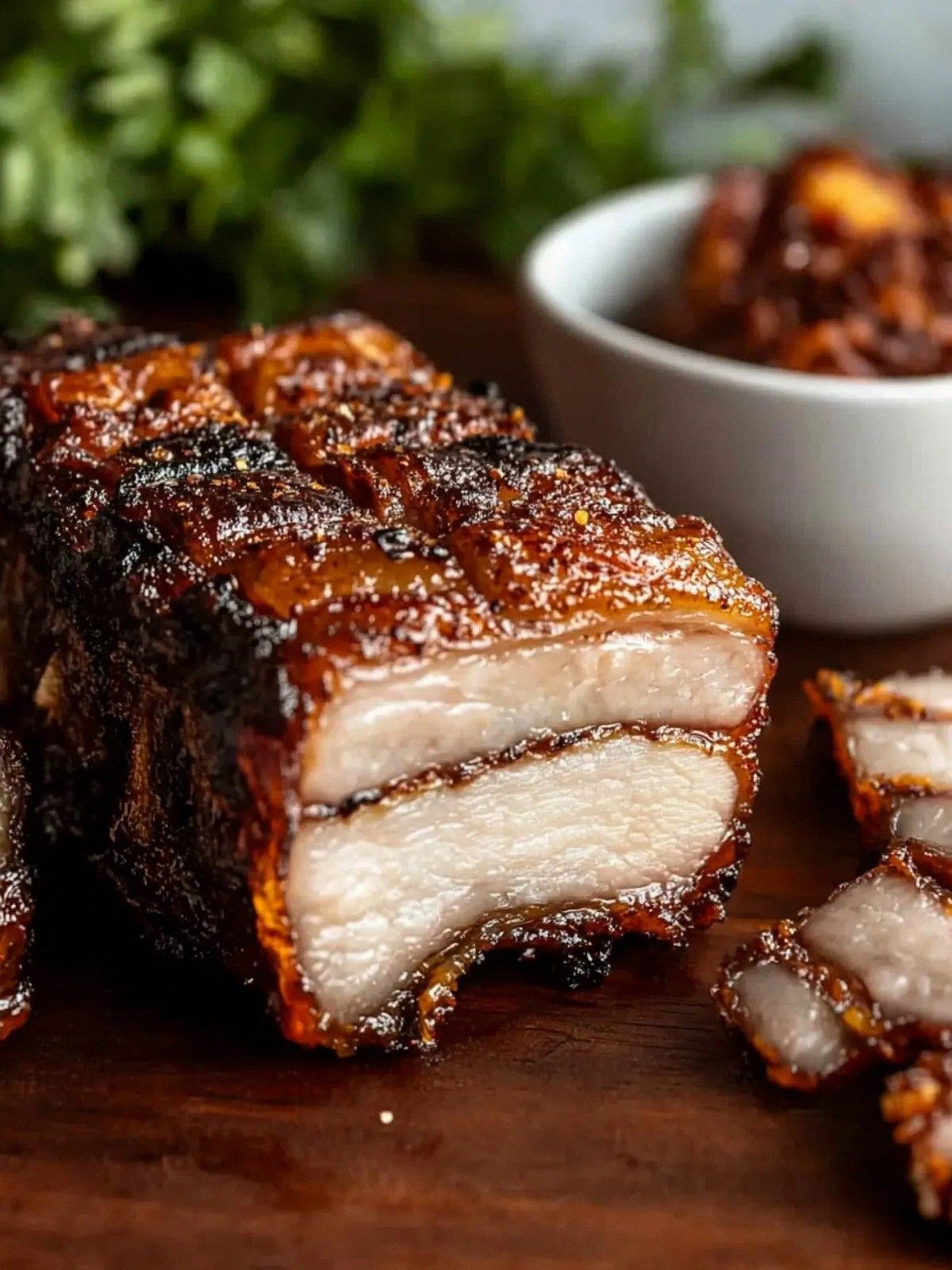
- When the pork has cooked for 2 hours, remove the pan from the oven and brush the pork belly with the glaze mixture, ensuring every scored line is coated. The glaze will caramelize during the final broil, giving the skin a dramatic crisp. Return the pan to the oven, increase the temperature to 425°F (220°C), and broil for 8–10 minutes, watching closely. The skin should be golden, blistered, and crisp—shattering like thin ice when you bite.
- Once the pork is done, let it rest for 10 minutes. This allows the juices to redistribute, keeping the meat moist. While it rests, pour the remaining glaze over the pan, letting it reduce to a thick, glossy sauce. The sauce should coat the vegetables as well, turning them into a side dish that’s practically a separate component.
- Slice the pork belly against the grain, aiming for 1/4‑inch thick slices. Serve immediately, spooning the reduced glaze over the top and around the plate. The contrast of crispy skin, tender meat, and glossy sauce will have your guests reaching for more. Remember the moment you tasted that first bite—crunch followed by a burst of citrusy, savory, and slightly spicy flavor.
- Serve the pork belly slices with the roasted vegetables, a sprinkle of fresh herbs, and a side of crusty bread to soak up the sauce. This dish is a feast for the senses—taste, sight, and aroma all converge. The final touch? A drizzle of extra virgin olive oil or a squeeze of fresh lemon to brighten the plate even further.
That’s it — you did it. But hold on, I've got a few more tricks that'll take this to another level.
Insider Tricks for Flawless Results
The Temperature Rule Nobody Follows
Many cooks skip the low‑temperature roast, opting for a quick high‑heat bake. That results in uneven cooking and a greasy texture. The key is to let the pork belly cook slowly at 300°F; this renders the fat gradually and keeps the meat moist. A friend once tried a high‑heat method and ended up with a dry center and soggy skin. The lesson? Patience pays off in flavor and texture.
Why Your Nose Knows Best
The aroma of pork belly cooking is a powerful cue. When the skin starts to crackle and the smell turns nutty, it’s time to broil. If you wait too long, the skin will burn; too early, and you’ll miss the crunch. Trust your nose—it’s the best indicator of doneness. I’ve learned to rely on scent rather than a timer, and it always pays off.
The 5‑Minute Rest That Changes Everything
Resting the pork belly for 10 minutes is crucial. It allows the juices to redistribute, preventing a dry bite. I’ve seen people slice right away, and the result is a stringy, dry center. The rest period also lets the glaze set on the skin, giving it a glossy sheen. If you’re in a hurry, a 5‑minute rest is the minimum; longer is better.
Glaze vs. Sauce: Don’t Mix Them Up
Some recipes call for a single glaze that’s brushed on the pork. In this version, I use a glaze for the final broil and a separate sauce to finish the dish. Mixing them can dilute the flavor profile and make the sauce too thin. Keep them distinct: glaze for the skin, sauce for the plate.
Vegetable Timing Matters
Adding the vegetables at the start of the roast allows them to absorb the pork juices. However, if you add them too early, they may become mushy. A good rule of thumb is to add them 30 minutes after the pork has started roasting. That gives them enough time to caramelize without losing their bite.
Storing Leftovers
If you have leftovers, let the pork cool completely, then refrigerate in an airtight container for up to 3 days. Reheat in a skillet over medium heat, adding a splash of water to keep the meat moist. For the sauce, reheat gently on the stove, whisking occasionally to maintain its glossy texture.
Creative Twists and Variations
This recipe is a playground. Here are some of my favorite ways to switch things up:
Spicy Korean BBQ
Swap the Dijon mustard for gochujang and add a splash of soy sauce. Top the pork with sesame seeds and sliced green onions. The result is a Korean‑inspired flavor that’s sweet, spicy, and umami‑rich.
Herb‑Crusted Pork Belly
Instead of the glaze, coat the pork belly in a mixture of chopped rosemary, thyme, garlic, and olive oil. Roast at 350°F until crispy. The herb crust provides a deep, aromatic flavor that pairs well with roasted root vegetables.
Maple‑Glazed Pork Belly
Replace the apple cider vinegar with maple syrup and reduce the lemon juice. The maple adds a sweet depth that balances the pork’s richness. This version is perfect for fall gatherings.
Smoky Chipotle
Add 1 tsp chipotle powder to the glaze and a dash of smoked paprika. The smoky heat pairs wonderfully with the pork’s natural flavors. Serve with a side of corn‑based salsa for a Mexican twist.
Asian Fusion
Use a mixture of rice vinegar, soy sauce, and a touch of honey. Add sliced scallions and a drizzle of sesame oil after roasting. The dish becomes a quick, flavorful Asian‑style pork belly.
Low‑Carb Keto Version
Omit the flour in the sauce, using a thickening agent like xanthan gum. Reduce the glaze to a sugar‑free version with stevia or monk fruit. Pair with sautéed spinach for a keto‑friendly meal.
Storing and Bringing It Back to Life
Fridge Storage
After the pork belly has cooled, place it in an airtight container or zip‑top bag. Store in the refrigerator for up to 3 days. The meat will retain its flavor and texture when reheated properly.
Freezer Friendly
Wrap the pork belly tightly in parchment paper, then place in a freezer bag. Freeze for up to 3 months. Thaw overnight in the refrigerator before reheating. The texture remains intact, and the flavor is preserved.
Best Reheating Method
Reheat the pork belly in a skillet over medium heat. Add a splash of water or broth to create steam, which keeps the meat moist. Finish with a quick broil or a few minutes in a preheated oven to re‑crisp the skin. The result is almost as good as fresh.