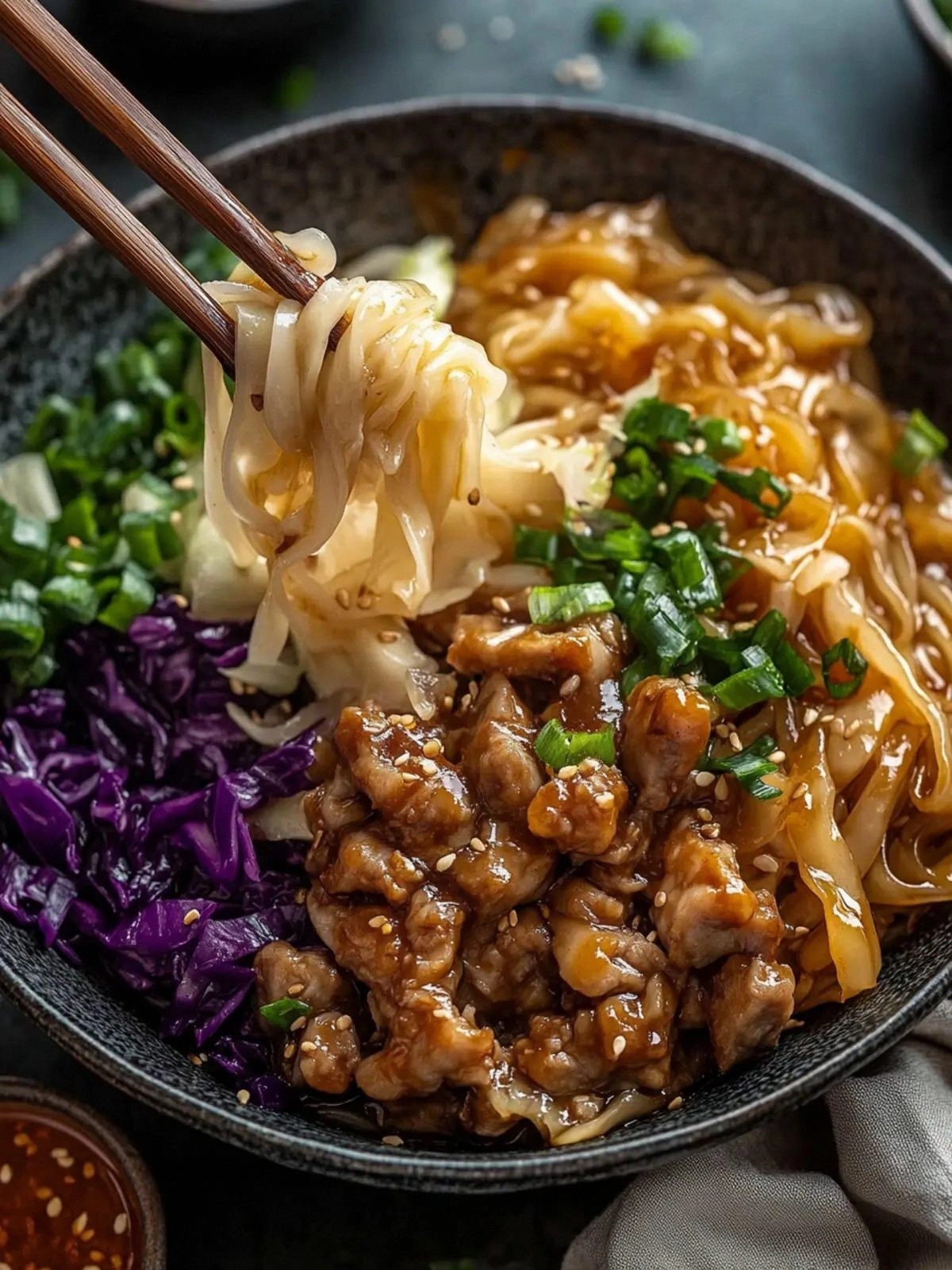
I was halfway through a midnight snack binge, scrolling through recipe blogs when I stumbled upon a potsticker‑infused noodle bowl that promised “instant comfort.” I laughed, because I’ve tried a dozen variations that left my taste buds confused, but the promise of crispy edges, silky noodles, and a slaw that sings made me pause. The aroma that hit me was a smoky, umami‑laden haze that made my kitchen feel like a dimly lit ramen joint, and I could almost hear the sizzle of pork in a hot pan. That moment, my friend dared me to create something that would blow my taste buds away, and I said, “Challenge accepted.”
Picture this: a bowl brimming with golden potsticker skins that crackle when you bite, a cloud of LoMein noodles that glisten with a glossy, sauce‑coated sheen, and a riot of cabbage slaw that adds a bright, crunchy contrast. The first bite sends a burst of savory pork, a whisper of ginger, and a subtle sweetness from mirin into your mouth, while the slaw’s acidity cuts through the richness. My kitchen filled with that intoxicating scent of toasted sesame and soy, and I could almost taste the sriracha’s daring kick dancing on my tongue. If you’ve ever struggled to balance bold flavors with comforting textures, this is the recipe that will rescue your dinner routine. Let me walk you through every single step — by the end, you’ll wonder how you ever made it any other way.
What sets this version apart is the deliberate layering of textures and the intentional use of pantry staples that elevate the dish to a gourmet experience. The potstickers aren’t just an add‑on; they’re the star that brings a satisfying crunch to every mouthful. The noodles are not just a filler; they’re a silky base that absorbs the sauce like a sponge, creating a harmonious mouthfeel. The cabbage slaw isn’t a garnish; it’s a refreshing counterpoint that brightens the dish, making it feel fresh and light. The sauce, a marriage of mirin, dark soy, and sesame oil, coats the noodles with velvet‑soft richness that lingers on the palate. And the final splash of sriracha turns the dish from comforting to exhilarating, giving it a playful heat that keeps you coming back for more. I dare you to taste this and not go back for seconds.
If you’ve ever tried a potsticker bowl that felt flat or overcooked, you’re not alone. Most recipes get this completely wrong by undercooking the pork or using too much broth, resulting in a soggy, flavorless mess. Here’s what actually works: a quick sear of pork for maximum flavor, a gentle simmer for the noodles, and a final stir of sauce that coats every strand. Picture yourself pulling this out of the pan, the whole kitchen smelling incredible, and the table filled with bowls that look as good as they taste. This is hands down the best version you’ll ever make at home, and I’m about to share the secrets that will make it happen.
What Makes This Version Stand Out
- Flavor: The sauce is a glossy, umami‑rich blend that coats the noodles like velvet, leaving every bite drenched in savory sweetness. It’s the difference between a bland bowl and a flavor explosion.
- Texture: The crispy potsticker skins create a satisfying crunch that contrasts with the soft noodles and crunchy slaw, giving the dish a dynamic mouthfeel.
- Ingredient Quality: Using fresh ground pork and premium LoMein noodles elevates the dish from ordinary to extraordinary.
- Time Efficiency: The entire meal comes together in 45 minutes, making it a perfect weeknight winner that still feels special.
- Make‑Ahead Potential: The sauce can be pre‑made, and the potstickers can be fried ahead of time, allowing you to assemble the bowl in minutes.
- Versatility: Swap pork for chicken or shrimp, and the dish adapts seamlessly, proving its flexibility.
- Crowd Appeal: The combination of familiar flavors and bold textures makes it a hit at dinner parties or family gatherings.
Alright, let's break down exactly what goes into this masterpiece. Each element has been carefully chosen to create a symphony of flavors and textures that dance together in every bite.
Inside the Ingredient List
The Flavor Base
Mirin and dark soy sauce form the backbone of our sauce, providing a balanced sweet‑savory profile that coats the noodles like silk. The mirin adds a subtle, almost caramelized sweetness, while the dark soy offers depth and a slight bitterness that cuts through the richness of pork. If you’re missing mirin, a splash of rice wine vinegar plus a pinch of sugar can mimic its sweetness.
The Texture Crew
LoMein noodles bring a silky, slightly chewy texture that absorbs the sauce beautifully. Ground pork, with its natural fat content, keeps the filling juicy and flavorful, preventing the dish from feeling dry. The cabbage slaw adds a bright, crisp bite that contrasts the softness of noodles and the tenderness of pork, keeping each mouthful exciting.
The Unexpected Star
Sesame oil, though used sparingly, infuses the dish with a nutty aroma that elevates the entire flavor profile. A dash of sesame oil turns a good sauce into a memorable one, much like the difference between a good and great espresso. If you’re allergic to sesame, a few drops of toasted almond oil can provide a similar depth.
The Final Flourish
Sriracha adds a fiery punch that balances the sweetness of mirin and the saltiness of soy. The heat from sriracha is not just for spice lovers; it awakens the palate and makes the dish feel lively. If you prefer a milder version, replace sriracha with a touch of chili oil or a sprinkle of red pepper flakes.
Everything's prepped? Good. Let's get into the real action and start cooking.
The Method — Step by Step
- Step 1: Prepare the Noodles
Bring a large pot of salted water to a rolling boil. Add the LoMein noodles and cook for 4–5 minutes until just al dente. Drain and rinse under cold water to stop the cooking process. Toss the noodles with a splash of sesame oil to keep them from sticking.
- Step 2: Sear the Pork
Heat a large skillet over medium‑high heat and add a tablespoon of oil. Sprinkle the ground pork with salt and pepper, then spread it out in the pan. Let it sear without moving for 2 minutes until a golden crust forms. Flip and cook another 2 minutes until browned on all sides. The moment the pork starts to caramelize, the kitchen smells like a dream.
- Step 3: Build the Sauce
Add the minced garlic and ginger to the pork, sautéing for 30 seconds until fragrant. Pour in the mirin, dark soy sauce, and chicken broth. Bring the mixture to a gentle simmer, letting the flavors mingle for 3 minutes. The sauce should thicken slightly, turning into a glossy glaze that clings to the pork.
- Step 4: Fry the Potstickers
In a separate pan, heat a tablespoon of oil over medium heat. Drop the potstickers in a single layer, leaving space between each. Fry for 2 minutes until the bottoms are golden brown. Flip and add a splash of water, cover, and let steam for 3 minutes. The steam will soften the skins while keeping them crispy on the edges.
- Step 5: Assemble the Slaw
In a bowl, combine the coleslaw mix, a tablespoon of rice vinegar, a teaspoon of sesame oil, and a pinch of sugar. Toss until the slaw is evenly coated. The acidity in the slaw will cut through the richness of the pork and noodles, balancing the dish.
- Step 6: Combine Noodles and Pork
Add the cooked noodles to the pan with the pork and sauce. Toss gently to coat the noodles thoroughly. If the sauce feels too thick, add a splash of chicken broth to loosen it. The noodles should look glossy and be coated in a silky sauce that clings to every strand.
- Step 7: Finish with Sriracha
Drizzle the desired amount of sriracha over the bowl. The heat should be visible, not overwhelming, allowing the other flavors to shine. The sriracha adds a final layer of complexity, turning the dish from comforting to exhilarating. The sizzle when it hits the hot bowl? Absolute perfection.
- Step 8: Plate and Serve
Divide the noodle and pork mixture among bowls. Nestle the crispy potstickers on top, then scatter the cabbage slaw over the surface. Garnish with a sprinkle of toasted sesame seeds and a few drops of sesame oil for that final aromatic flourish. The bowl should look like a work of culinary art, inviting you to dig in immediately.
That's it — you did it. But hold on, I've got a few more tricks that'll take this to another level. The next section will give you insider tips that will elevate the dish from great to unforgettable.
Insider Tricks for Flawless Results
The Temperature Rule Nobody Follows
The key to perfect pork is not just searing but maintaining a steady medium‑high heat. Too low, and the fat renders out slowly, leaving the pork dry; too high, and it burns before it’s fully cooked. Keep the skillet preheated and add oil just before the pork enters. This technique ensures a golden crust and a juicy interior.
Why Your Nose Knows Best
When you’re cooking, trust the aroma as your best gauge of doneness. The pork should smell like roasted garlic and caramelized onions, not raw. If the sauce is too thin, the scent will be watery; if it’s too thick, it will smell like burnt sugar. Listen to the kitchen’s clues.
The 5‑Minute Rest That Changes Everything
After you finish cooking, let the bowl rest for five minutes before serving. This allows the flavors to meld, and the sauce to settle, giving the noodles a chance to absorb the glaze fully. A quick rest also gives the potstickers a moment to crisp up a little more, adding that satisfying crunch.
The Perfect Slaw Balance
Too much vinegar in the slaw can overwhelm the dish, while too little will make it bland. Use a ratio of 1:1:1 for vinegar, oil, and sugar to keep the slaw bright yet balanced. A pinch of salt will enhance the sweetness and cut through the pork’s richness.
The Secret of the Sriracha Splash
Sriracha is a powerful ingredient; a little goes a long way. Start with a teaspoon and taste before adding more. The heat should be noticeable but not overpowering, allowing the other flavors to shine through. I’ve seen people add too much and end up with a bowl that feels more like a fire than a feast.
The Final Garnish Trick
A sprinkle of toasted sesame seeds and a drizzle of sesame oil right before serving adds a final aromatic flourish that elevates the dish. The seeds give a subtle crunch, while the oil enhances the nutty flavor profile. This small touch turns a good bowl into a memorable experience.
Creative Twists and Variations
This recipe is a playground. Here are some of my favorite ways to switch things up:
The Veggie‑Rich Version
Replace ground pork with finely chopped mushrooms and diced carrots. The earthy flavor of mushrooms pairs beautifully with the savory sauce, while the carrots add sweetness and crunch. This version is perfect for a vegetarian meal that still feels hearty.
The Spicy Thai Twist
Swap the coleslaw for a Thai basil slaw made with shredded cabbage, fresh basil, lime juice, and fish sauce. Add a handful of fresh sliced chilies for an extra kick. The bright citrus and herbal notes transport the dish to a tropical beach.
The Protein Swap
Use ground turkey or beef instead of pork for a different flavor profile. The leaner meats will produce a lighter dish, while the same sauce and slaw keep it delicious. This swap is great for those looking to reduce fat content.
The Sweet & Smoky Variation
Add a tablespoon of maple syrup to the sauce and finish with a drizzle of smoked paprika. The maple brings a gentle sweetness, while the paprika adds a subtle smokiness that deepens the overall flavor. This version is ideal for fall evenings.
The Quick Microwave Fix
If you’re short on time, microwave the noodles and pork separately, then combine them with the sauce. The microwave will keep the pork juicy while the noodles stay al dente. Add a splash of water to the sauce to keep it from drying out.
The Crispy Topping
Finish the dish with a handful of crushed tortilla chips or crunchy fried onions. The crunch adds a new texture layer, and the subtle corn flavor complements the Asian-inspired sauce. This twist is perfect for a party or a casual gathering.
Storing and Bringing It Back to Life
Fridge Storage
Store the noodle bowl in an airtight container for up to 3 days. Keep the potstickers separate if you prefer them crisp. When reheating, add a splash of water to the sauce to prevent it from drying out.
Freezer Friendly
Freeze the noodles, pork, and sauce separately in freezer‑proof bags. The potstickers should be fried fresh before serving, but you can freeze them and re‑cook in a skillet. Thaw overnight in the fridge and reheat gently.
Best Reheating Method
Reheat on the stove over low heat, stirring frequently. Add a splash of broth or water to loosen the sauce. Finish with a quick sauté of the potstickers to restore crispness. The dish should smell like it just left the kitchen.